

If you've been told you may need a root canal procedure in Hornchurch, Essex, the words themselves can sometimes sound more alarming than the treatment really is. Perhaps you're already in pain, or perhaps an infection has shown up during an examination and you're now wondering what happens next.
The most important thing to understand is that root canal treatment isn't designed to cause pain. It's used to remove infection or damaged tissue from inside a tooth, with the aim of relieving symptoms and preserving your natural tooth wherever we reasonably can.
At our private dental practice in Hornchurch, we'll take the time to show you what we've found, explain why we're recommending root canal treatment, and talk honestly about the alternatives before anything begins.
What is root canal treatment?
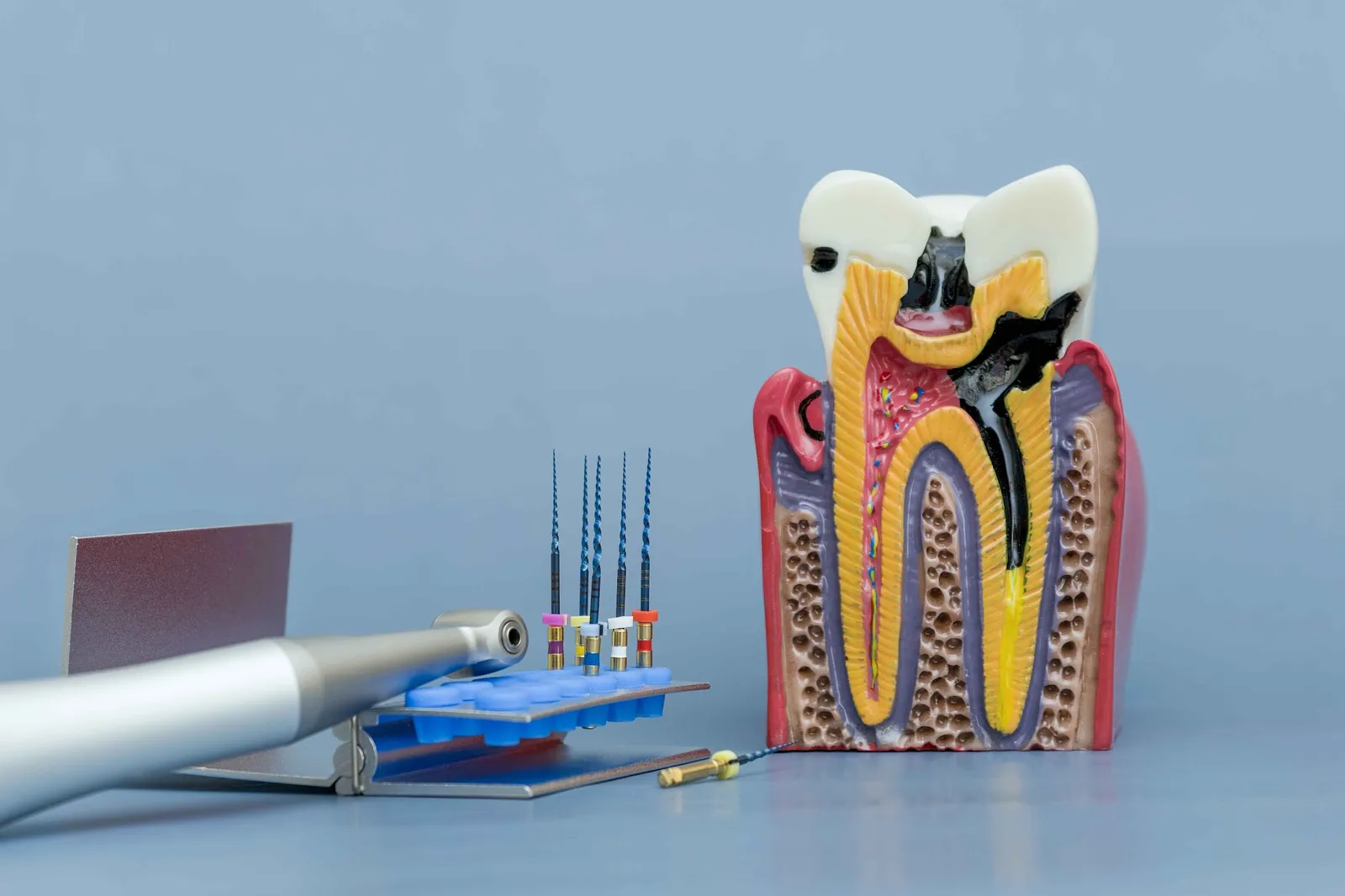
Inside every tooth is a soft central area called the dental pulp, containing nerves and blood vessels. If the pulp becomes inflamed, infected or dies following decay, a crack, trauma or another problem, the infection can spread through the root canal system.
During root canal treatment, we remove the infected or dying tissue, carefully clean and disinfect the canals inside the tooth and then fill and seal them.
The purpose isn't to remove the tooth, in fact, it's quite the opposite. Root canal treatment, also known as endodontic treatment, is designed to help you keep a natural tooth that might otherwise need to be extracted. The NHS describes the treatment in the same way: infection is removed from inside the tooth before the root canal is cleaned, filled and sealed.
What root canal symptoms should you watch for?
The symptoms of an infected or badly inflamed tooth can vary, and having one of these symptoms doesn't automatically mean you need a root canal.
However, it's worth arranging a dental assessment if you notice:
- Persistent or severe toothache
- Pain when biting or chewing
- Sensitivity to hot or cold that lingers
- Swelling around a tooth, gum or jaw
- A small swelling or 'gum boil' near a tooth
- A persistent unpleasant taste in your mouth
Tooth decay, cracks and dental abscesses are among the problems that can lead to infection inside a tooth. If you have significant swelling, severe pain or signs of an abscess, please seek urgent dental advice rather than waiting to see whether it settles.

Do root canals hurt?
This is probably the question we're asked most often, and it's understandable. Root canal treatment has carried an unfortunate reputation for years.
Modern root canal treatment shouldn't be painful while we're treating the tooth once it's properly numb. We use local anaesthetic before starting, just as we would for many other dental procedures. You may be aware of pressure or what we're doing, but the aim is that you shouldn't feel pain from the tooth itself.
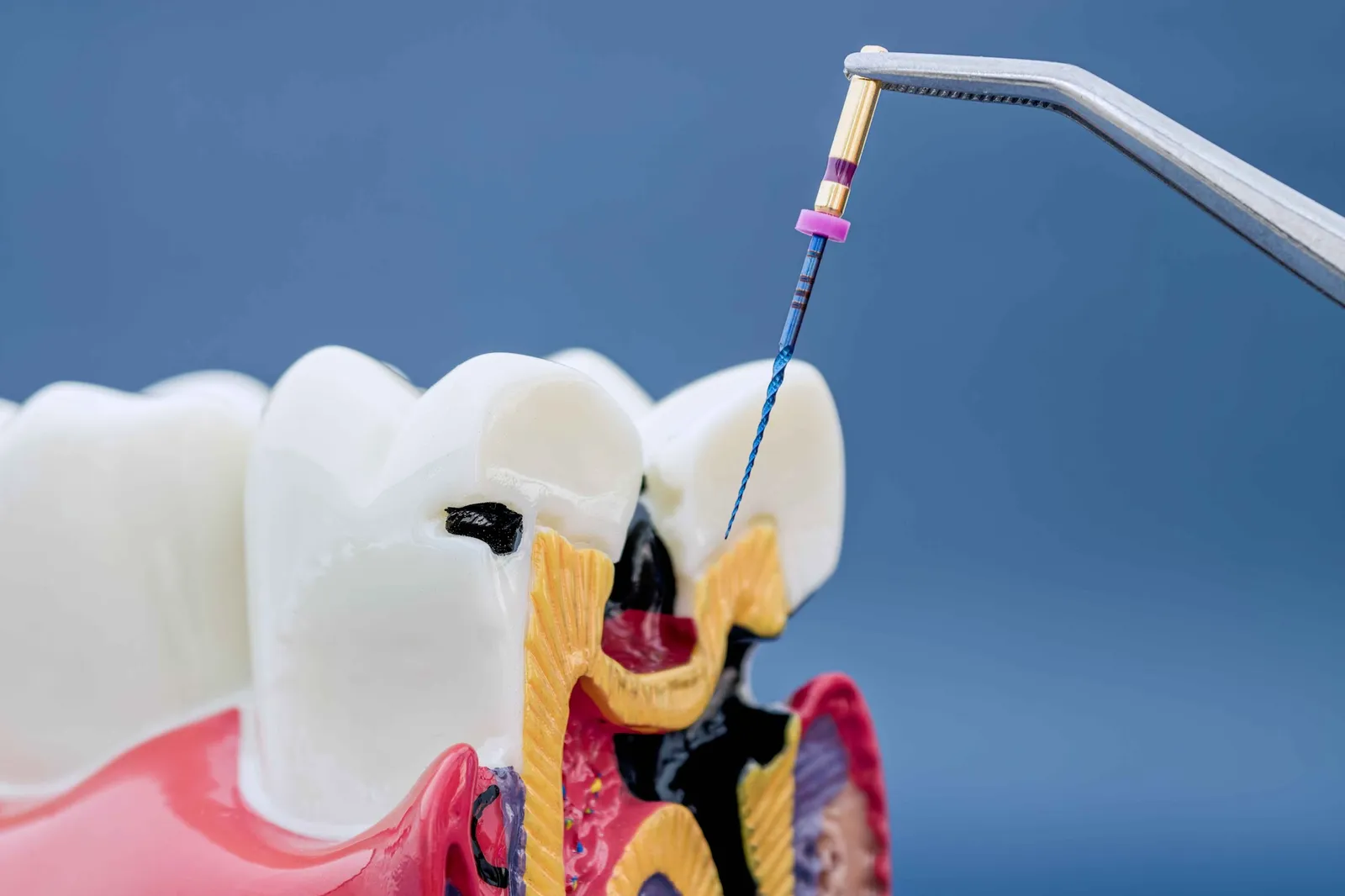
At Hacton, we use modern rotary endodontic instruments rather than relying solely on older hand-filing techniques. These allow us to clean and shape the root canals efficiently and precisely.
The British Endodontic Society also notes that modern root canal treatment typically involves little or no discomfort and that, for many patients, it's the infection before treatment that causes the pain.
What happens during the dental root canal procedure?
We'll begin with an examination and dental X-ray so we can assess the tooth and understand the shape of its roots.
Once we've agreed that root canal treatment is appropriate, the usual process involves:
- Local anaesthetic: we numb the tooth before treatment begins.
- Rubber dam isolation: a small protective sheet keeps the tooth clean and dry while we work.
- Cleaning and shaping: we remove infected tissue and carefully clean and shape the root canals using rotary instruments.
- Disinfection: the inside of the tooth is thoroughly cleaned.
- Filling and sealing: once prepared, the canals are filled with a biocompatible material and the tooth is sealed.
- Final restoration: we'll usually discuss a crown or another suitable restoration afterwards to protect the treated tooth.
At Hacton, many routine root canals can be completed in one longer appointment, although this depends on the tooth and individual clinical situation. More complicated cases may require additional treatment.
How long does root canal treatment take?
Many routine root canal treatments at Hacton can be completed in one longer appointment, although more complex teeth may need additional visits. The exact time depends on which tooth is being treated, the number and shape of the canals, and whether specialist endodontic input is needed.
Root canal vs tooth extraction: which is better?
If the tooth can be predictably restored, saving your natural tooth with root canal treatment will often be preferable to removing it.
Extraction is irreversible, so once a tooth has been removed, you may also need to consider whether the gap should be replaced with a bridge, denture or dental implant.
There are situations where extraction genuinely is the more appropriate choice, for example if a tooth has a severely fractured root, very little restorable tooth structure or a poor long-term outlook. We won't recommend root canal treatment simply because the tooth technically could be treated. We'll look at whether saving it makes good clinical sense for you.
That's why a root canal vs tooth extraction in Hornchurch decision starts with a proper examination rather than a blanket answer.
What if my root canal is particularly complex?
Most routine root canal treatment in Hornchurch is managed within our practice using modern rotary techniques. Some teeth, however, are more complicated.
Previous failed root canal treatment, severely curved or calcified canals, unusual anatomy or a fractured instrument can sometimes mean specialist endodontic care is the better option.
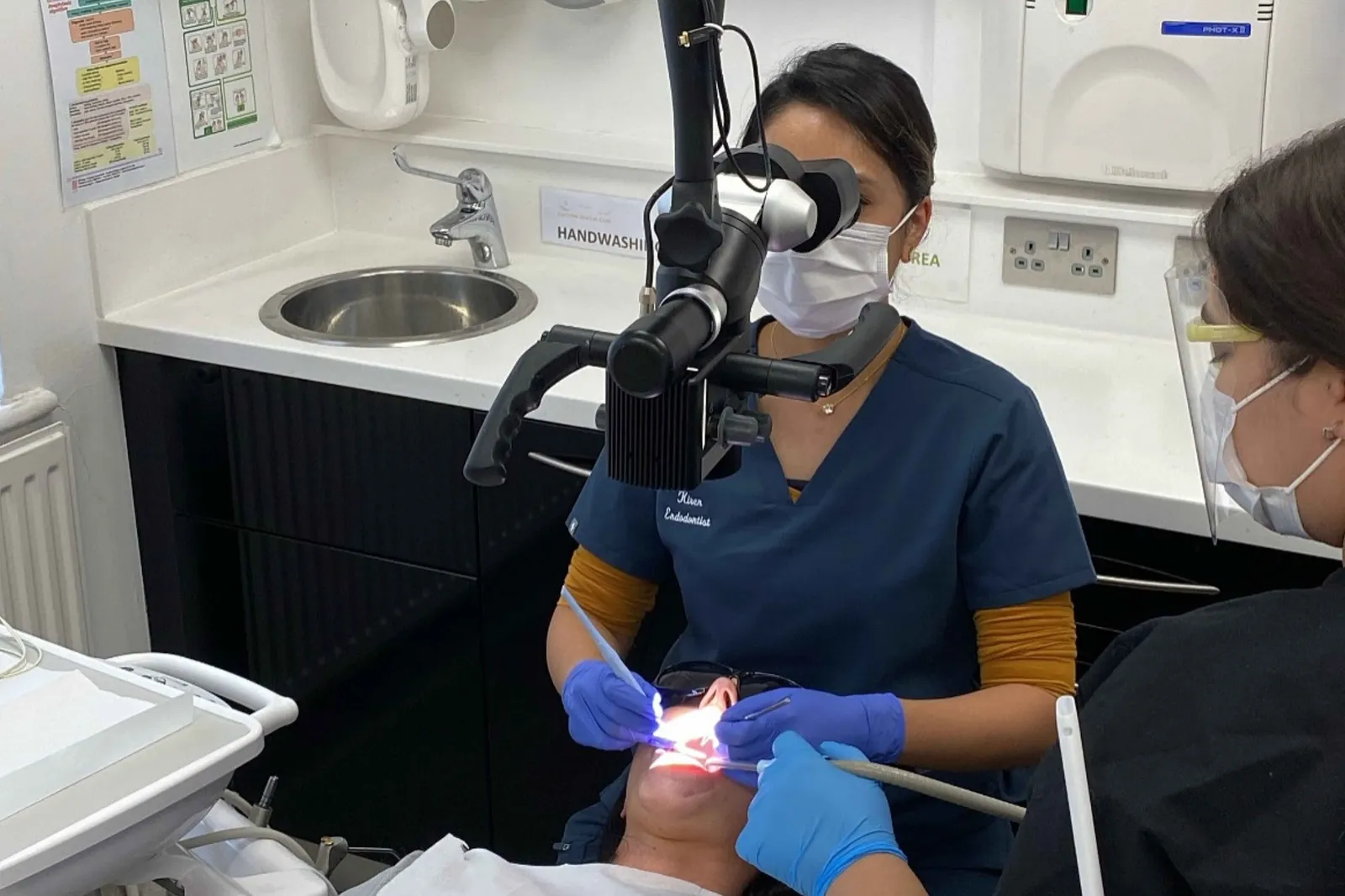
Where that's the case, we can arrange treatment through our specialist endodontist options in Hornchurch. Specialist treatment can use a high-magnification operating microscope and dedicated instruments for more complex cases, before your ongoing restorative care returns to us.
We'd rather refer appropriately than attempt treatment that would be better managed at specialist level.
How much does a root canal cost in Hornchurch?
Our current root canal cost in Hornchurch starts from £400 per tooth. The exact fee depends on which tooth needs treatment because front teeth, premolars and molars have different numbers and configurations of root canals.
A crown following root canal treatment currently starts from £850, where one is recommended.
We'll give you a clear written estimate before treatment begins. We also offer 0% finance over 12 months, subject to status and terms, and members of our dental plan receive a 10% treatment discount where applicable. See our current root canal fees here.
How should you care for your tooth after root canal treatment?
Once the anaesthetic wears off, it's normal for the tooth and surrounding area to feel tender or slightly sore for a while. This should gradually settle as the tissues recover.
The NHS advises that some soreness or swelling can occur following treatment and should improve, while follow-up appointments and good ongoing dental care remain important.
If your discomfort becomes severe, begins to worsen rather than improve, or you develop significant swelling or feel unwell, please contact us so we can assess what's happening.
Nervous about root canal treatment?
Tell us if you feel nervous about root canal treatment with us. You don't need to pretend you're comfortable if you're worried.
Our approach to anxious patients is deliberately unhurried. We can allow more time, explain treatment before we begin, agree ways for you to signal that you need a pause and build breaks into the appointment.

For patients with more significant dental anxiety, we can also discuss oral or IV sedation where it's clinically appropriate. Sedation isn't necessary for everyone, and sometimes knowing that you're in control, with enough time and the same familiar team, makes a considerable difference on its own.
Same-day root canal in Hornchurch: can we get you out of pain quickly?
If severe toothache or an infected tooth is keeping you awake, getting you out of pain is our first priority. We offer same-day emergency appointments in Hornchurch during surgery hours, and if you call early we'll do everything we can to see you that day.
At your emergency appointment, we'll examine the tooth and take any necessary X-rays to understand what's causing the pain. Where possible, we can provide immediate pain-relieving treatment or short-term stabilisation to help settle the tooth. If the tooth needs root canal treatment, we'll explain what needs to happen next and arrange the definitive treatment as soon as possible. Many routine root canal treatments with us can then be completed in one longer appointment.
While we don't describe every emergency visit as a same-day full root canal, you shouldn't feel that you simply have to wait in pain until a longer treatment appointment becomes available. Our immediate aim is to diagnose the problem, make you as comfortable as we can and put the right next step in place. For severe swelling affecting your breathing or swallowing, call 999 or attend A&E.
Book root canal treatment in Hornchurch
If you've been told you need root canal treatment, or you have a tooth that's becoming increasingly painful, we can take a careful look and explain what's happening.
We provide honest, unhurried private dental care for patients across Hornchurch, Elm Park, Emerson Park and surrounding parts of Essex, with routine root canal treatment available in-house and specialist support for more complex cases where needed.
Call 01708 447 603 or book a consultation online to talk to us about root canal treatment.
Frequently asked questions
Can a tooth need root canal treatment even if it doesn't hurt?
Yes, a tooth can need root canal treatment even if you don't have pain or other obvious symptoms. Sometimes the pulp inside the tooth has already died, and an infection may instead be discovered during a routine examination or on an X-ray. If we identify an infected tooth at your consultation, we'll explain what we can see and whether root canal therapy, monitoring or another treatment is appropriate.
Can antibiotics get rid of a root canal infection?
No, antibiotics alone don't usually remove the source of an infection inside a tooth that needs root canal therapy. The infected tissue generally needs definitive treatment, such as root treatment or extraction, while antibiotics are reserved for particular situations, including infection that is spreading or causing systemic symptoms. If you're in pain in Hornchurch or the surrounding Essex area, contact us so we can assess the cause rather than relying on antibiotics alone.
Can I go back to work after root canal treatment?
Many people can return to work or normal everyday activities after root canal treatment, although you may prefer some recovery time after a longer appointment. The time root canal treatments take varies depending on the tooth and complexity, and your mouth may remain numb for several hours afterwards. At your consultation, we can explain how long we expect the treatment to take so you can plan your day around the procedure.
Can I eat after root canal treatment?
Yes, you can usually eat after root canal treatment once the numbness has worn off, but you should follow the advice we give you for the treated tooth. A recently treated tooth may be more vulnerable until its final restoration is complete, so we may ask you to avoid heavy chewing on that side. If the tooth still needs a permanent filling or crown, we'll explain when that should be completed and how to look after the tooth in the meantime.
Can I brush and floss after root canal treatment?
Yes, you should continue brushing and cleaning your teeth after root canal treatment, while taking care around a tender or temporarily restored tooth. Good daily care helps protect the treated tooth, surrounding gums and the rest of your mouth while everything settles. If you're unsure how to clean around the area after treatment, our Hornchurch dental team can show you what to do.
Can root canal treatment be carried out through an existing crown?
Yes, root canal treatment can sometimes be carried out through an existing crown without removing it first. Whether this is appropriate depends on the condition of the crown, the tooth underneath and the access needed to clean the canals and complete the root filling. If access is particularly difficult, we may recommend assessment by an endodontist through our wider group before deciding on the safest approach.
Can a root canal-treated tooth still get a cavity?
Yes, a tooth can still develop decay after root canal treatment because the natural tooth structure remains in your mouth. Root canal treatment removes damaged or infected tissue from inside the tooth, but it doesn't prevent future decay affecting the outside of the tooth. Regular check-ups and good home care remain important after root treatment, just as they are for your other teeth.
Can a tooth change colour after root canal treatment?
Yes, a root canal-treated tooth can sometimes become darker or change colour over time. If the tooth is visible in your smile and the colour bothers you, we can assess why it has changed and explain which restorative or cosmetic dentistry options may be suitable. For patients in Hornchurch and surrounding parts of Essex, that could mean discussing the tooth as part of your wider dental care rather than treating the colour in isolation.
Can I have root canal treatment while pregnant?
Yes, root canal treatment can often be carried out during pregnancy when treatment is clinically necessary. Please tell us if you're pregnant or think you may be pregnant before the procedure, so we can plan X-rays, local anaesthetic, medication and your care appropriately. If you're unsure whether treatment can wait, book a consultation and we'll assess the tooth and talk you through the safest timing.
How do I choose a root canal dentist near me in Hornchurch?
When choosing a root canal dentist near you in Hornchurch, look for clear diagnosis, appropriate imaging, modern endodontic techniques, transparent fees and access to an endodontist if the tooth is complex. At our private practice, we provide routine root canal treatment in Hornchurch and can arrange specialist endodontics through our wider group when needed. We also offer unhurried appointments for nervous patients and same-day emergency appointments during our normal opening hours where availability allows. If you're based in Hornchurch, Elm Park, Emerson Park or nearby parts of Essex, you can book a consultation with us to have the tooth assessed.