
Healthy gums rarely ask for attention. They sit quietly in the background while we focus on whiter teeth or a straighter smile, yet they are the foundation everything else rests on. When gums are firm, pale pink and comfortable, the teeth they support tend to stay put for life. When they start to struggle, the early signs are so gentle that most people miss them for months, or brush them off as nothing to worry about.

That is exactly why gum health deserves a closer look. A little blood in the sink, a whiff of morning breath that lingers longer than it should, a tooth that suddenly winces at cold water. On their own each one feels minor. Together they are often the first quiet warning of gum disease, and the earlier you notice, the easier it is to put right. This guide walks through what to watch for and how a dental hygienist Hornchurch patients see regularly can help you stay ahead of it.
Key takeaways
- Bleeding when you brush is not normal and is usually the earliest sign of gum disease.
- Early gum disease, called gingivitis, is reversible with the right care.
- Left untreated, it can progress to periodontitis, which is manageable but permanent.
- A hygiene visit combines a professional clean with home-care advice tailored to you.
- Most people benefit from a hygiene appointment every six months alongside their check-ups.
Why do my gums bleed when I brush?
If your gums bleed when you brush or floss, they are inflamed. That inflammation is your body reacting to a build-up of plaque, a soft, sticky film of bacteria that gathers along the gum line every day. Healthy gums do not bleed, so this is worth taking seriously rather than ignoring.
The good news is that bleeding gums are very treatable, especially when caught early. Many people instinctively brush more gently or avoid the area that bleeds, but that often makes things worse because the plaque stays put. The answer is usually better cleaning, not less of it, and a hygienist can show you exactly how.

Is bleeding gums serious? The early signs to know
Bleeding is one signal, but it rarely travels alone. Look out for bad breath that does not shift after brushing, gums that look red or puffy rather than firm and pink, teeth that feel more sensitive than usual, and gums that seem to be pulling back so your teeth look a little longer. Any of these can point to gum disease in its early stages.
Bad breath deserves a special mention because it is so often misunderstood. Persistent bad breath is frequently caused by the same bacteria behind gum inflammation, sitting below the gum line where a toothbrush cannot reach. Freshening up with mints treats the symptom, not the cause. A thorough professional clean gets to the root of it.
The two stages of gum disease
Gum disease moves through two stages, and the difference between them matters enormously.
The first is gingivitis. This is inflammation of the gums caused by plaque, and it is completely reversible. With a professional clean and an improved daily routine at home, gums can settle down and return to full health within weeks. Most cases of bleeding gums are gingivitis, which is why acting early is such good news.
The second stage is periodontitis. If gingivitis is left unchecked, the inflammation can spread deeper and start to damage the bone and fibres that hold your teeth in place. This stage is manageable, and a good hygiene programme can stop it in its tracks, but the damage already done cannot be undone. That is the whole reason we encourage people to come in at the bleeding-gums stage rather than waiting.
Can gum disease be reversed?
Gingivitis can be reversed, and often surprisingly quickly. Periodontitis cannot be reversed, but it can be stabilised and kept under control so it does not progress. The dividing line between the two is early action, which is where regular hygiene visits and everyday dental care through good general dentistry genuinely pay off.
What happens at a hygiene visit at Hacton
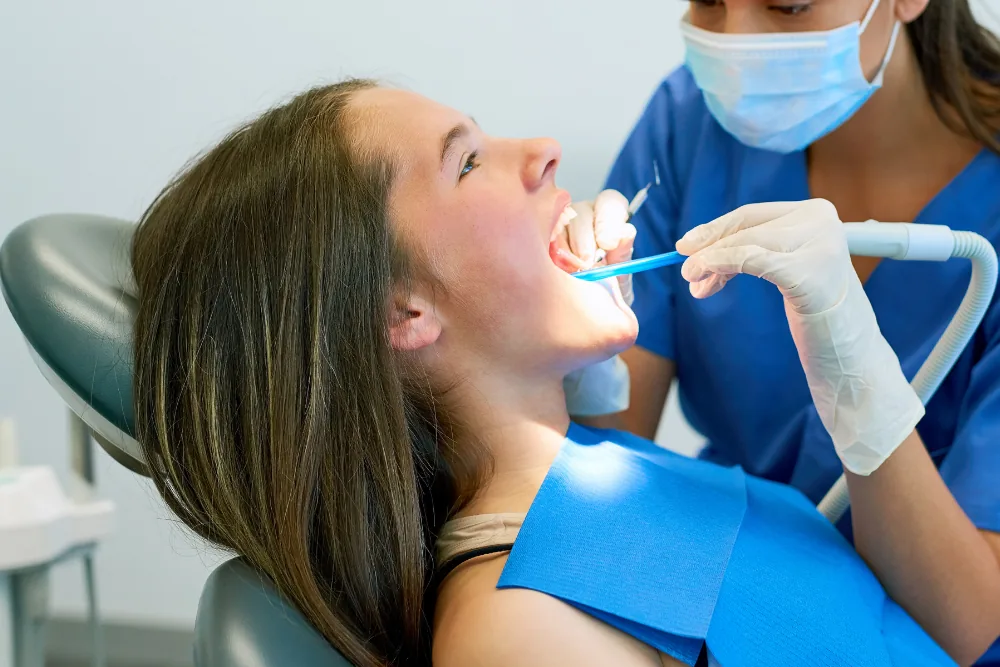
A hygiene appointment at Hacton is more relaxed than many people expect. Your hygienist begins by checking the health of your gums and looking for those early warning signs before anything else happens. Then comes a professional scale and polish to remove hardened plaque, known as tartar, that a toothbrush simply cannot shift once it has set.
We also offer Airflow, a gentle system that uses a fine jet of water, air and fine powder to lift away stains and bacterial build-up. Many patients find it more comfortable than traditional cleaning, and it leaves teeth feeling smooth and noticeably fresher. To finish, your hygienist gives you home-care advice shaped around your own mouth, whether that means a different brushing angle, help getting on with floss or interdental brushes, or tips for reaching those awkward back teeth.
Does a scale and polish hurt?
For most people, no. A scale and polish is usually painless, and Airflow in particular tends to feel gentle. If your gums are inflamed you might notice some tenderness, but this generally settles as your gum health improves over the following visits. If you feel anxious about it, tell your hygienist. A calm, unhurried appointment is something we care about for every patient across Hornchurch, Emerson Park, Ardleigh Green and Gidea Park.
How often should I see a hygienist?
For most people, a hygiene visit every six months works well and slots neatly alongside your routine check-ups. If you are more prone to gum problems, your hygienist may suggest coming in more often to keep things stable. Check-ups and hygiene visits do different jobs. Your dentist looks after the health of your teeth and mouth as a whole, while your hygienist focuses on your gums and on keeping plaque under control. Together they give your smile the best possible protection.
What does it cost?
Hygiene appointments are straightforward to book as a one-off, and you can see the details on our fees and finance page. If you would rather spread the cost and keep on top of your gum health throughout the year, our membership plans include regular hygiene visits along with your check-ups, which many patients find easier to budget for and easier to stick to.
When you need a little more support
Our friendly therapists also offer specialist periodontal appointments for more advanced gum concerns. For patients with later-stage periodontal issues, a deeper level of care is sometimes needed, and we are fortunate to have an in-house specialist periodontist who can step in when required. Should your situation call for it, a referral to our periodontist means you can receive that specialist care without having to go elsewhere. With the right treatment, even established periodontal disease can be brought under control and stabilised, giving your teeth the best possible chance of staying with you for years to come.

Ready to look after your gums?
Healthy gums are one of the simplest wins in dentistry, and it starts with a single visit. If you have noticed bleeding, bad breath or sensitivity, or you simply want to stay ahead of gum disease treatment in Hornchurch, we would love to see you. New to the practice? Our new patients page tells you everything you need to know about your first visit. When you are ready, book a hygiene appointment online and give your smile the foundation it deserves.