Teeth grinding (bruxism) is one of the most common - and most damaging - dental problems we see. The good news: there are several effective treatments depending on the cause and severity.
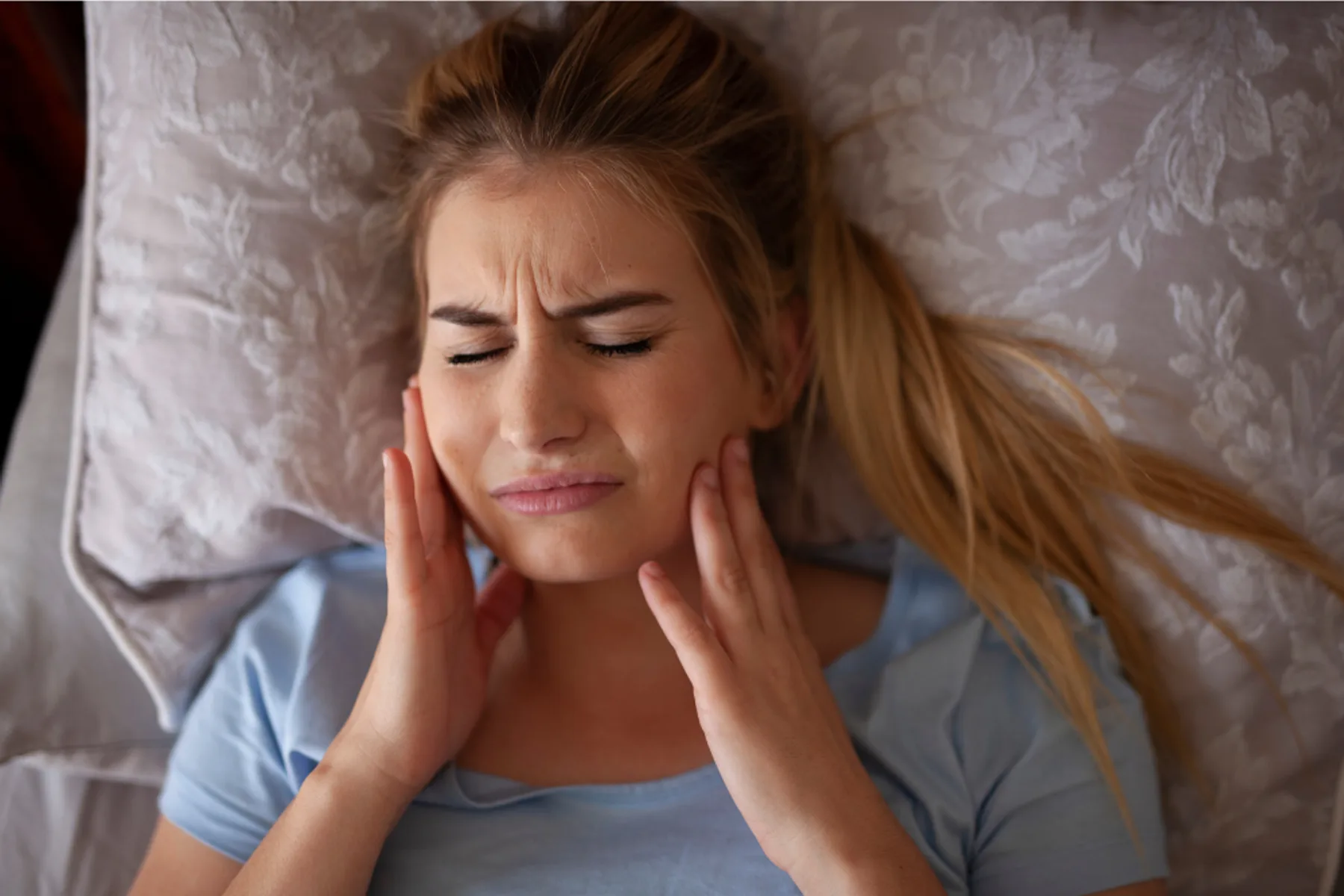
Most teeth grinding happens in your sleep, so you may not realise you're doing it. Signs include:
The most common cause. Grinding is often a physical manifestation of stress, especially stress that hasn't been processed during the day.
A bite where the teeth don't meet evenly can drive subconscious grinding as the jaw tries to find a comfortable position.
Teeth grinding is associated with sleep apnoea and disrupted sleep patterns, sometimes as a contributing cause and sometimes as a symptom.
All of these can disrupt sleep quality and increase nocturnal grinding activity.
Many children grind their baby teeth and grow out of it as the adult teeth come in - rarely needs treatment beyond monitoring.
A thin, comfortable, custom-made guard that you wear in bed. Protects your teeth from grinding force and reduces jaw tension overnight.
Read more →Anti-wrinkle injection that reduces clenching force. Both protects the teeth and slims a square jaw line. £350.
Read more →Where the bite is genuinely uneven, we can adjust the contact points so the teeth meet more evenly.
Read more →Worn, chipped or cracked teeth rebuilt with composite bonding, porcelain veneers or crowns.
Read more →Let's take the first step towards your healthiest, most confident smile. Join our Hornchurch, Essex dental practice today.
Book nowIt won't stop the grinding action itself but it absorbs the force, protecting your teeth from wear and reducing jaw muscle tension overnight.
Custom night guards at Hacton Dental Care are quoted at consultation; current placeholder pricing pending confirmation at content review.
A small dose of anti-wrinkle injected into the masseter muscle reduces the force you can generate when clenching, both protecting the teeth and slimming a square jaw line.
Many patients have masseter treatment purely for the jaw-slimming aesthetic effect, although it's most powerful when combined with grinding management.
No - the dose is calibrated to reduce excessive clenching force without affecting normal chewing function, which patients typically find unchanged.
Most children grow out of grinding as their adult teeth come in and rarely need active treatment, although a check-up is sensible if it persists past age 10.
3 to 4 months for the first treatment, often extending to 4 to 6 months as the muscle adapts with regular top-ups.
Closed daily 1.00pm – 2.00pm for lunch.
Report feedback on this page